
Editing
Start a style sheet that another editor can follow
Record the choices that are specific to the manuscript, with enough context for someone else to apply them consistently.
Editing
A small continuity record can save a long search. Record the details that constrain later scenes, rather than everything you know about the cast.
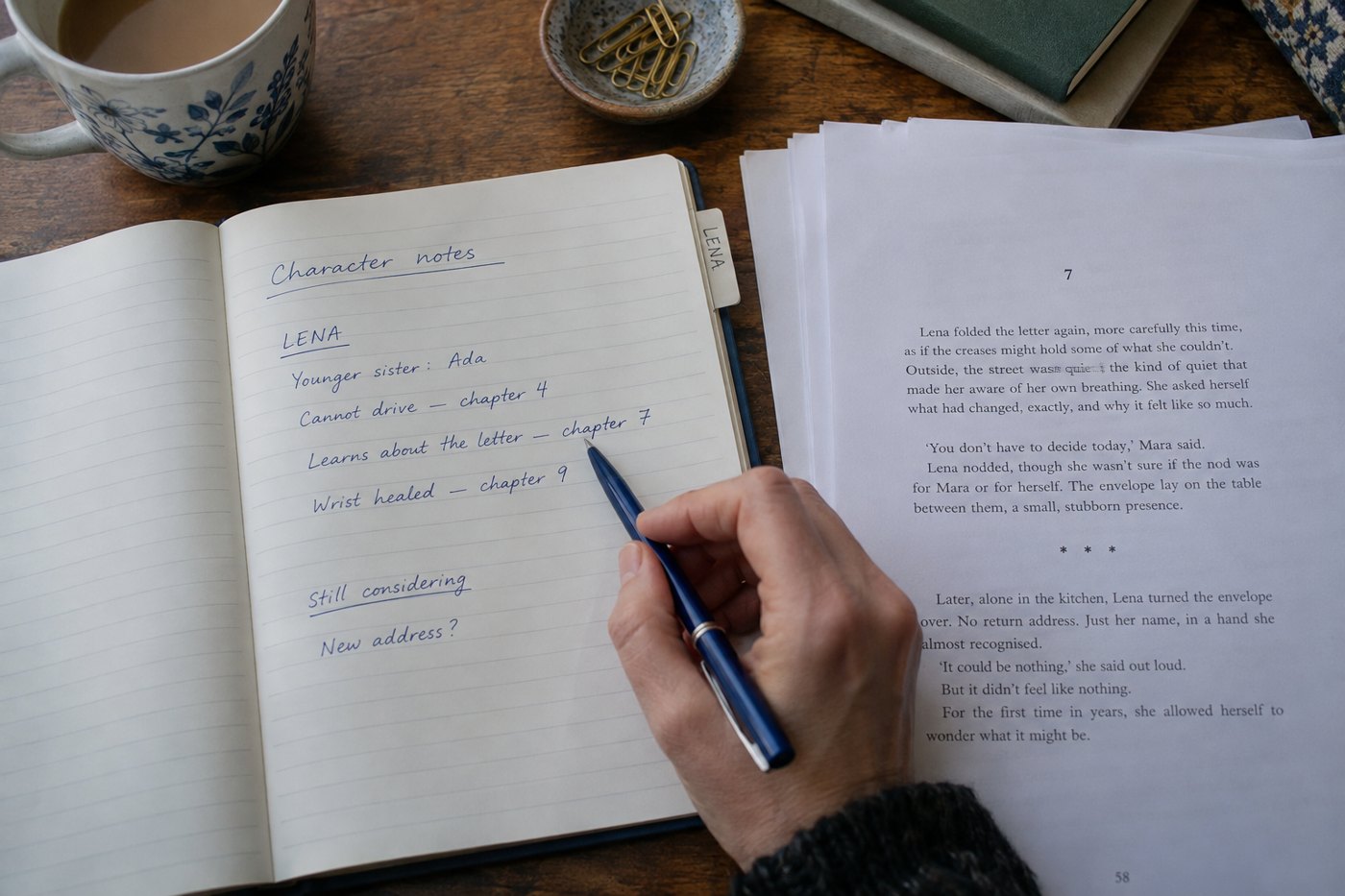
When a character mentions a younger sister, the reader may remember her long after the writer has forgotten the line. A later claim that the character grew up alone now needs an explanation. The difficulty is rarely a lack of imagination. It is remembering which version of an imagined life has actually reached the page.
Keep a short record alongside the manuscript. For each recurring character, note the name used in the text, approximate age at a defined point, relationships, and any physical or biographical facts that affect events. Add a chapter or scene reference. “Cannot drive; chapter four” is more useful during revision than a page of personality adjectives.
Separate established details from possibilities. A thought in your planning notebook does not become a fact in the novel simply because you wrote it down. Use two headings, “On the page” and “Still considering”, or another distinction you can recognise immediately. This prevents an abandoned idea from quietly returning as continuity.
A character may begin with a broken wrist and recover halfway through the book. Recording only “broken wrist” invites mistakes in both directions. Note when the injury occurs, which activities it affects, and the scene in which that limitation changes. The same approach works for jobs, addresses, alliances and possession of an important object.
For a story with a small cast, one document with a heading for each person is enough. A larger cast may benefit from a spreadsheet with one row per person, but keep long explanations in linked notes. The tool should shorten a question such as “When did Lena learn about the letter?” rather than make maintaining the record another writing project.
Read the record after a substantial revision. Moving a revelation can change what a character knows in several later scenes. Search those scenes with a specific question in mind. A list of facts alone will not reveal that somebody is reacting to information they have not yet received.
When you change a fact, update both the manuscript and the record in the same session. Mark the change if another reader is using the document. Otherwise the supposedly authoritative note can become the source of the next error.
The record need not hold every description. If eye colour never matters and never appears, leave it out. Start with the details that a reader could use to contradict the story, then add information when a real retrieval problem arises. A half-page you consult is worth more than a character database you stop opening.
Editing
Record the choices that are specific to the manuscript, with enough context for someone else to apply them consistently.

Editing
Dates, travel and elapsed time can contradict a story even when each scene reads well. A separate chronology makes those clashes easier to find.