Editing
What to look for during a line edit
A line edit examines how the prose delivers meaning, emphasis and voice once the larger shape of the manuscript is reasonably settled.
Editing
Choose an editorial pass by the state of the manuscript and the decisions that remain, then describe the required work explicitly.
The phrase “a final check” can refer to very different tasks. One author may have a complete but unedited word-processing document. Another may have designed pages that have already been edited and approved. Both want errors removed, but the material and the appropriate scope of intervention differ.
The Chartered Institute of Editing and Proofreading describes copyediting as work on the detail of a text, including language, consistency and clarity. It places proofreading after editing and layout, as the final check of the words and their presentation. This distinction is a useful starting point when planning a publication.
Look at what still needs to be decided. If whole chapters may move or the main explanation remains incomplete, address that work before commissioning a narrowly defined final check. If the text is stable but has not received detailed editorial attention, discuss the copyediting it needs. If the designed pages are ready for checking, provide those pages and the relevant editorial decisions.
Imagine a book that uses two spellings of the same fictional village. During copyediting, the editor can query the intended form, apply the agreed choice and record it for later reference. At proof stage, the proofreader can check that the approved spelling appears consistently in the laid-out pages.
Now imagine that a paragraph about the village has disappeared during a file transfer. The issue becomes visible only by checking that the final material contains what should be there. A carefully edited source document does not by itself establish that the publication file is complete. Each stage examines the form of the work that exists at that point.
A sentence that needs substantial rethinking presents another distinction. Earlier in the process, there may be room to discuss alternatives and revise the surrounding explanation. In laid-out pages, a large change can affect line endings, page breaks and references elsewhere. Necessary corrections still matter, but their consequences must be followed through the final files.
These examples show why one pass should not be treated as a substitute for every other kind of attention. Checking the wording of a manuscript and checking its final presentation answer related but different questions.
Describe the actual material when seeking editorial help: its length, subject, intended reader, format and state of completion. Include representative pages, especially if some parts contain tables, quotations, notes or specialised terminology. A simple opening chapter may not reveal the demands of the rest of the book.
Ask which tasks the proposed work covers and how uncertainties will be handled. Do not assume that a general edit includes extensive source verification, a redesign, an index or a full assessment of the argument. If you need those tasks, state the need and agree on the relevant responsibility.
For your own planning, separate correction from verification. Someone can make a date's presentation consistent without establishing that the date is historically correct. Likewise, a reference can look tidy while pointing to the wrong source. Decide which facts, quotations and references require checking and retain the evidence needed to check them.
Record the scope in a short, clear brief. Include the files that form the agreed working version, any existing style decisions and the expected form of the returned work. This reduces the chance that two people edit different versions or interpret “check everything” in incompatible ways.
Editorial work can produce questions that only the author or another responsible person can answer. A sentence may permit two meanings; a name may differ from a supplied source; a reference may be incomplete. Allow time to resolve those questions before treating the text as settled.
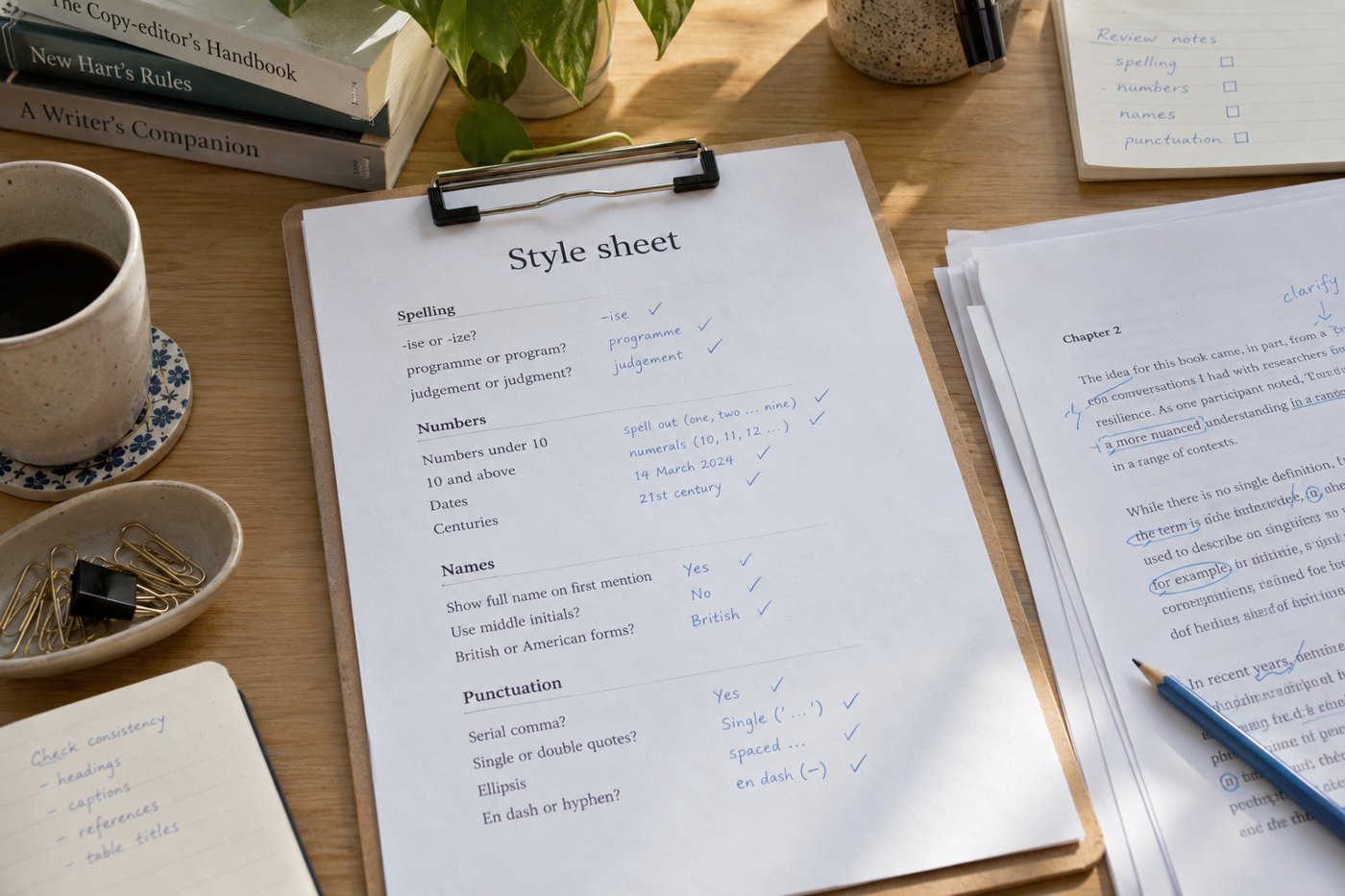
After the edited manuscript is accepted, carry its decisions forward into the publication files. A style sheet and a clearly identified approved text can help preserve continuity. When proofs arrive, check the actual pages rather than assuming that every earlier correction has transferred successfully.
If corrections are applied to a proof, inspect the changed areas and the material affected by them. A new line can push a heading, caption or reference onto another page. The scale of that follow-up should reflect the changes made and the way the publication is assembled.
You do not need to memorise terminology before discussing a project. You do need to describe what exists and what you expect the next person to accomplish. Ask them to explain how their proposed work fits that situation.
A clear sequence lets each pass build on the previous one. The manuscript's ideas and organisation become stable, its wording receives the agreed attention, and its final form is checked. Keeping those decisions visible makes the handover between stages easier to manage.
Editing
A line edit examines how the prose delivers meaning, emphasis and voice once the larger shape of the manuscript is reasonably settled.
Editing
Record the choices that are specific to the manuscript, with enough context for someone else to apply them consistently.