Writing
Making consequences feel specific
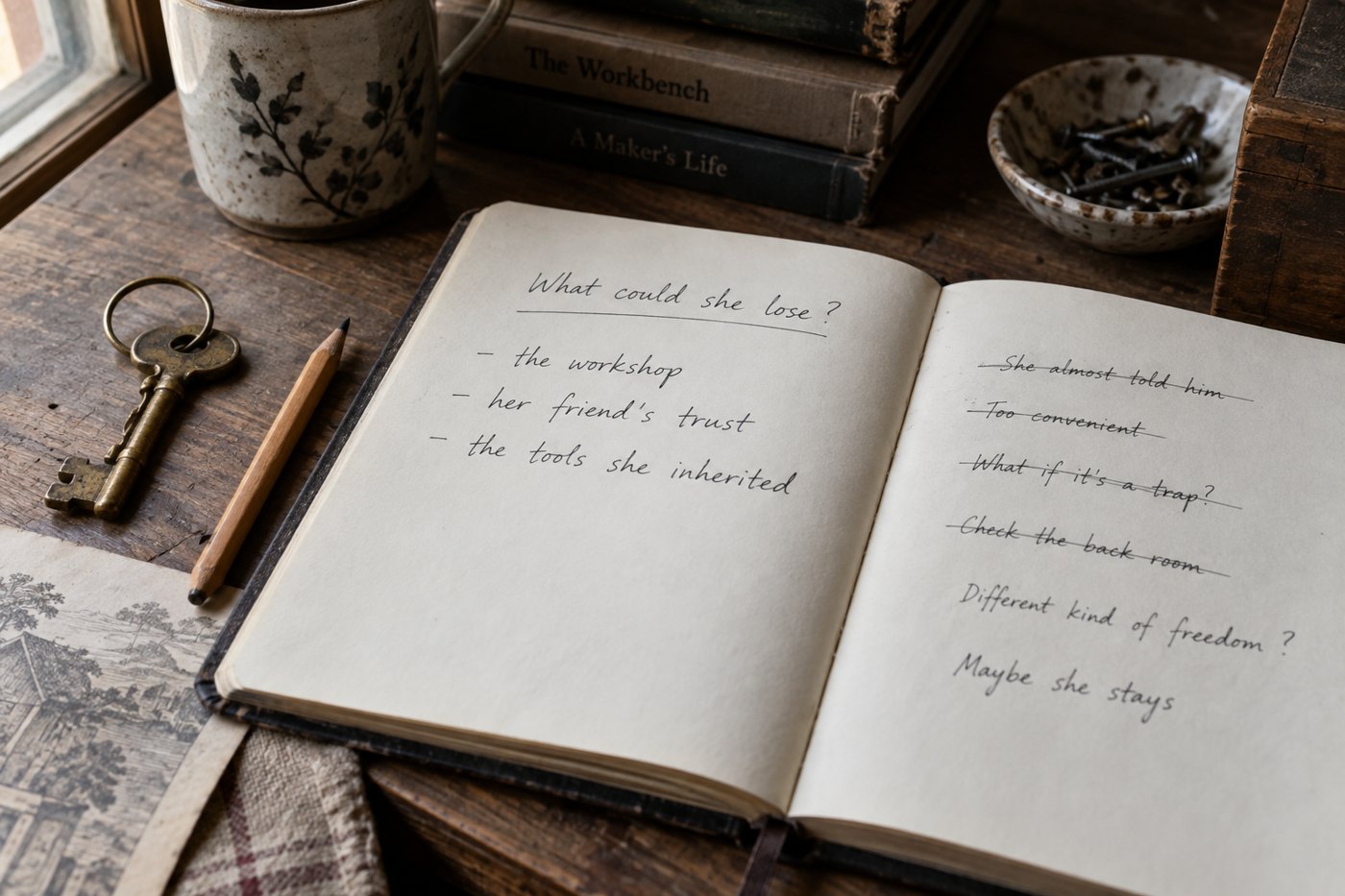
Consequences become legible when readers know what a person values and how a particular outcome would alter it.
Writing
Stillness can carry tension when attention, understanding or intention changes within it.

A person sits at a kitchen table after an argument, washing and drying the same cup. The scene can remain physically quiet while a decision develops. Perhaps the person has to choose whether to leave a note, make a call or wait for someone to return. The reader follows the movement toward that choice.
Identify what is unresolved when the scene begins. It may be a practical problem, an emotional contradiction or a question the character has avoided. Quiet scenes can give those matters room to become visible. Without a direction, however, a passage of reflection may simply repeat feelings that earlier action has already established.
Choose an activity that belongs to the person and the moment. Folding laundry, waiting for a kettle or sorting keys can give thought a physical rhythm. The activity should not become a symbolic puzzle the reader must decode. Its immediate purpose matters: the character is trying to complete an ordinary task while something difficult interrupts their attention.
A scene becomes active when what the character notices changes. At first they may focus on a stain because it lets them avoid the empty chair. Later, they may finally look at the chair and recognise that the other person took their coat. The external facts are modest, but the understanding advances.
Use memory selectively. A remembered line can change the interpretation of the earlier argument. A long account of the entire relationship may halt the current movement. Ask what piece of the past the person needs at this moment, and what that recollection makes them do differently.
Silence between people can also change. One person may initially treat it as punishment, then recognise hesitation or grief. Show the evidence that permits the new reading: a failed attempt to speak, a carefully placed object, a question answered through action. The scene's pressure can reside in the difficulty of making a small response.
A quiet scene does not need an interruption to prove that it belongs in the book. The phone need not ring and a stranger need not arrive. An ending can show the character putting the second cup back on the shelf, moving it to the table or leaving it in the sink. The choice matters if the preceding passage has made the alternatives meaningful.
Read the scene beside the one before it. Does it absorb a consequence, revise a belief or prepare a decision that would otherwise feel abrupt? If it only restates the earlier scene's emotion, shorten it or find the new question within that emotion.
Then check the next scene. The quiet decision should have an effect, even if the character later reverses it. A private intention can shape a conversation's opening, a route through town or a refusal to answer. Allowing the inward movement to influence later action gives the quiet scene a place in the book's larger structure.
Writing
Consequences become legible when readers know what a person values and how a particular outcome would alter it.
Writing
Background information works best when readers can connect it to a question or action already in progress.