Author marketing
Find article ideas connected to your book
Use the book’s questions and decisions to find subjects that can support a complete article of their own.
Author marketing
Plan for crops, file sizes and usage permissions before the camera comes out.
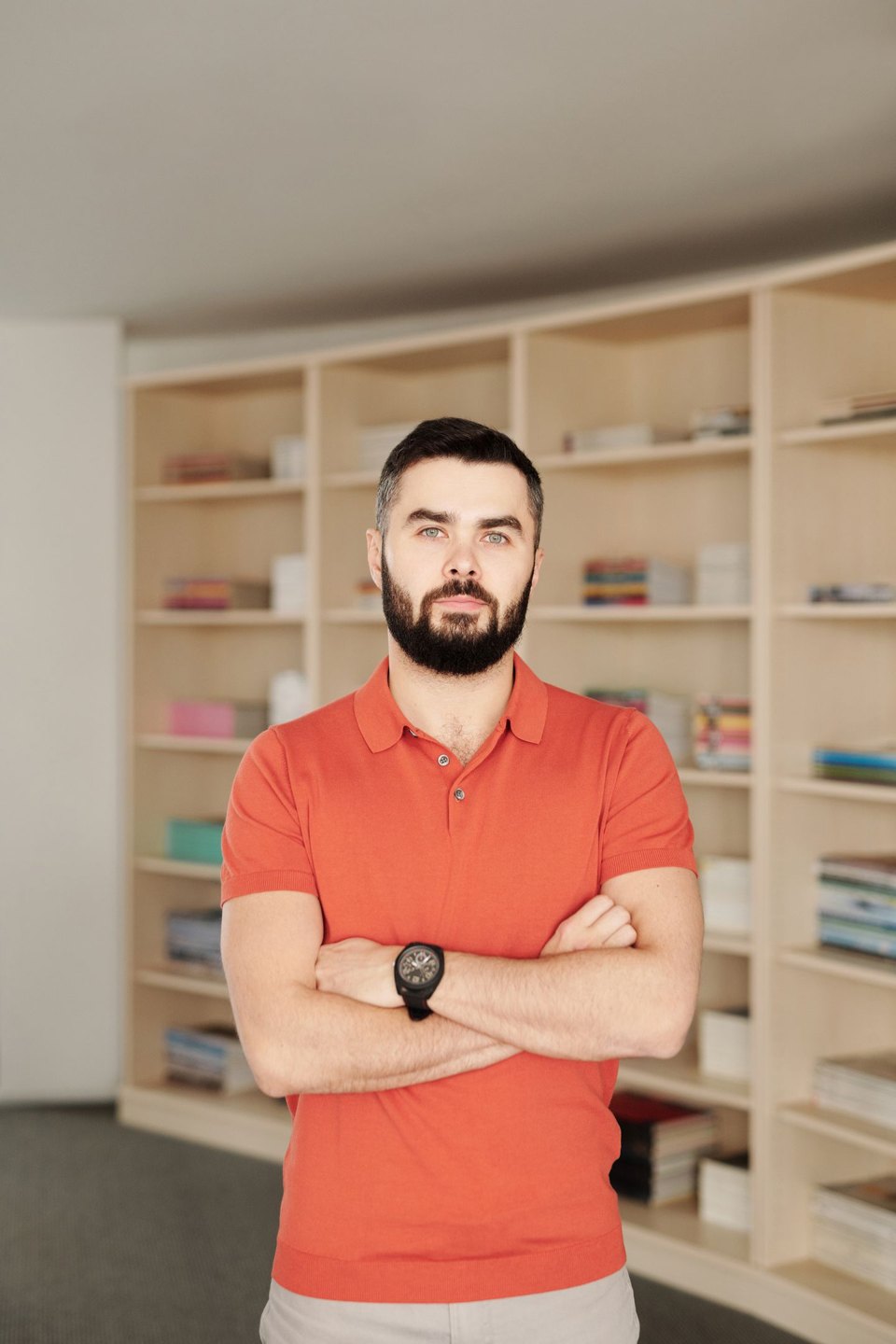
An author photograph may be used as a small website portrait, a square event listing, a press image or a printed jacket photograph. Those placements ask different things of the same source. Make a short list of likely uses before arranging the session so the photographer can leave enough room around the subject and supply suitable files.
Think about orientation and crop. A closely framed horizontal portrait may be difficult to turn into a vertical head-and-shoulders image. A square crop can cut into hair or hands if the original composition is too tight. Ask for a few deliberate framing variations rather than assuming every layout can be solved afterward.
The photograph should make the person easy to recognise at a small size. A busy background can be attractive in a large image but distracting in a small programme listing. Look for separation between face, clothing and background, with lighting that remains clear when the image is reduced.
Bookshelves, a writing desk or an outdoor location can work, but none is compulsory. Choose a setting that feels appropriate to the intended use without inventing a professional identity. A portrait does not need visible literary props to establish that its subject writes.
Discuss clothing, background and mood with the photographer using examples that explain the desired effect. “Relaxed expression with clear eye contact” is more actionable than “make it look authorly.” Avoid references that depend on copying another person's distinctive portrait.
Confirm the intended uses, delivery formats, permitted cropping and any credit requirements. Keep the agreement with the image files. A photograph commissioned for one purpose may not automatically cover every future advertising or commercial use, so resolve the scope with the photographer rather than assuming.
Ask for an appropriate high-resolution file and a web-sized version if that fits the arrangement. Preserve the original delivery and make resized copies for individual uses. Repeatedly downloading and recompressing a small image can gradually reduce quality and leave you without a usable source when a print request arrives.
View candidate photographs at both full size and a small thumbnail size. Look for a natural expression, clear focus and a crop that works in the intended placements. Ask whether the picture remains recognisable beside a short biography, rather than judging it only as a standalone artwork.
Keep the chosen file clearly labelled with the author's name and version. Include the credit instruction in the press kit where required. When your appearance or public presentation changes substantially, decide whether the photograph still serves its purpose. A useful author portrait is an accurate, adaptable identification image, not a permanent statement about the writer's personality.