Publishing
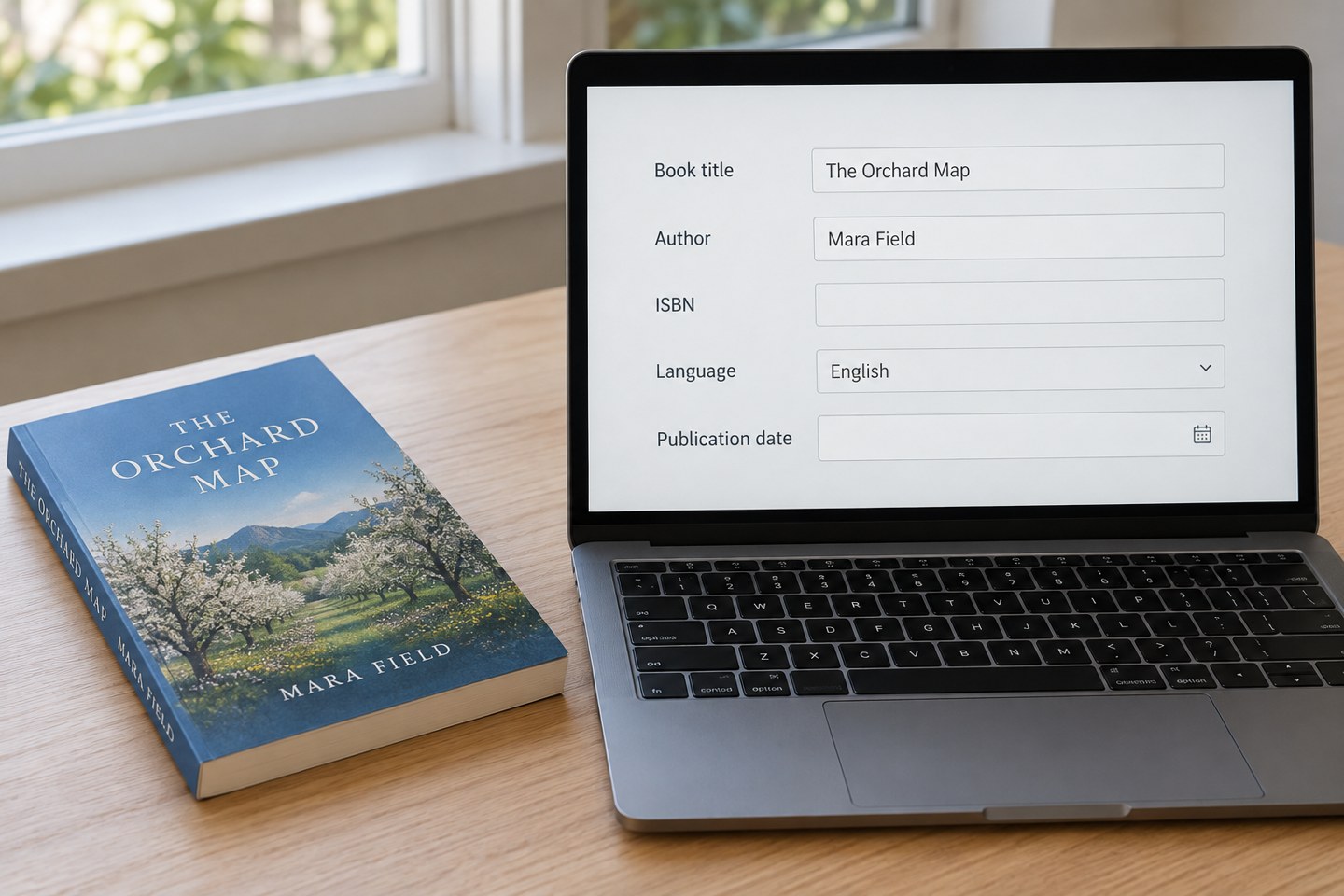
Book metadata before upload day
Keep one approved record of the information that describes each edition, then check every upload and listing against it.
Publishing
Use categories and keywords to describe the book a reader will actually receive.

Categories should reflect the principal reading experience or subject, not every topic mentioned in passing. A novel containing a courtroom scene is not automatically a legal thriller. A memoir that includes recipes is not necessarily a cookbook. Identify what the reader is choosing the book to read, then examine the categories available in the particular system.
Read category descriptions where they are provided. Similar labels may distinguish audience, form or subject in ways that matter. Keep a note of the reasoning behind your choices, especially when the book crosses boundaries. This is more useful for later review than a list copied from another title.
KDP's category guidance links choices to the intended audience and marketplace. Other services may organise their categories differently. Use current instructions for the platform you are completing, and do not assume that a selection made in one interface transfers unchanged to another.
Keywords can express relevant details that broad categories do not capture. Consider the setting, central subject, approach and intended reader. For a handbook on container gardening, phrases about small balconies or rented spaces may describe a real focus if the book covers those circumstances substantially. They should not be added merely because they sound attractive.
Avoid filling fields with terms that promise material the book does not contain. A reader who arrives through a misleading phrase may be disappointed even if the tactic produces a view. Use accurate language a suitable reader might use to describe their interest or problem.
Follow the platform's current rules about keywords and promotional claims. Do not assume that another book's visible wording establishes what is permitted or effective. Some information belongs in other fields, and repetition does not necessarily add useful meaning. Keep the actual entered phrases in your metadata record.
Read the categories, keywords, title and description together. Do they point towards the same audience and kind of book? If the cover signals a light comedy while the categories and description promise a dark crime novel, changing a keyword will not solve the underlying positioning problem.
Use a few relevant books to understand how a subject is organised, without simply copying their selections. Their audience, emphasis or format may differ from yours. Comparison can generate questions, but your own contents should support the final choice.
Review metadata when the book changes or when a service changes its available options. Keep a dated record of substantial adjustments so you can distinguish deliberate decisions from accidental drift. Avoid interpreting a short fluctuation in views or sales as proof that one keyword caused it; many factors can change at the same time.
The immediate standard is accuracy. A suitable reader should recognise the book described by the fields, and the book itself should fulfil the expectation those fields create.
Publishing
Keep one approved record of the information that describes each edition, then check every upload and listing against it.

Publishing
A description should help the right reader recognise the book’s central promise without turning into a synopsis or a list of claims.