
Publishing
Choosing an imprint name for a publishing project
An imprint name should be easy to use consistently across the book, publication records and future titles.
Publishing
Keep one approved record of the information that describes each edition, then check every upload and listing against it.
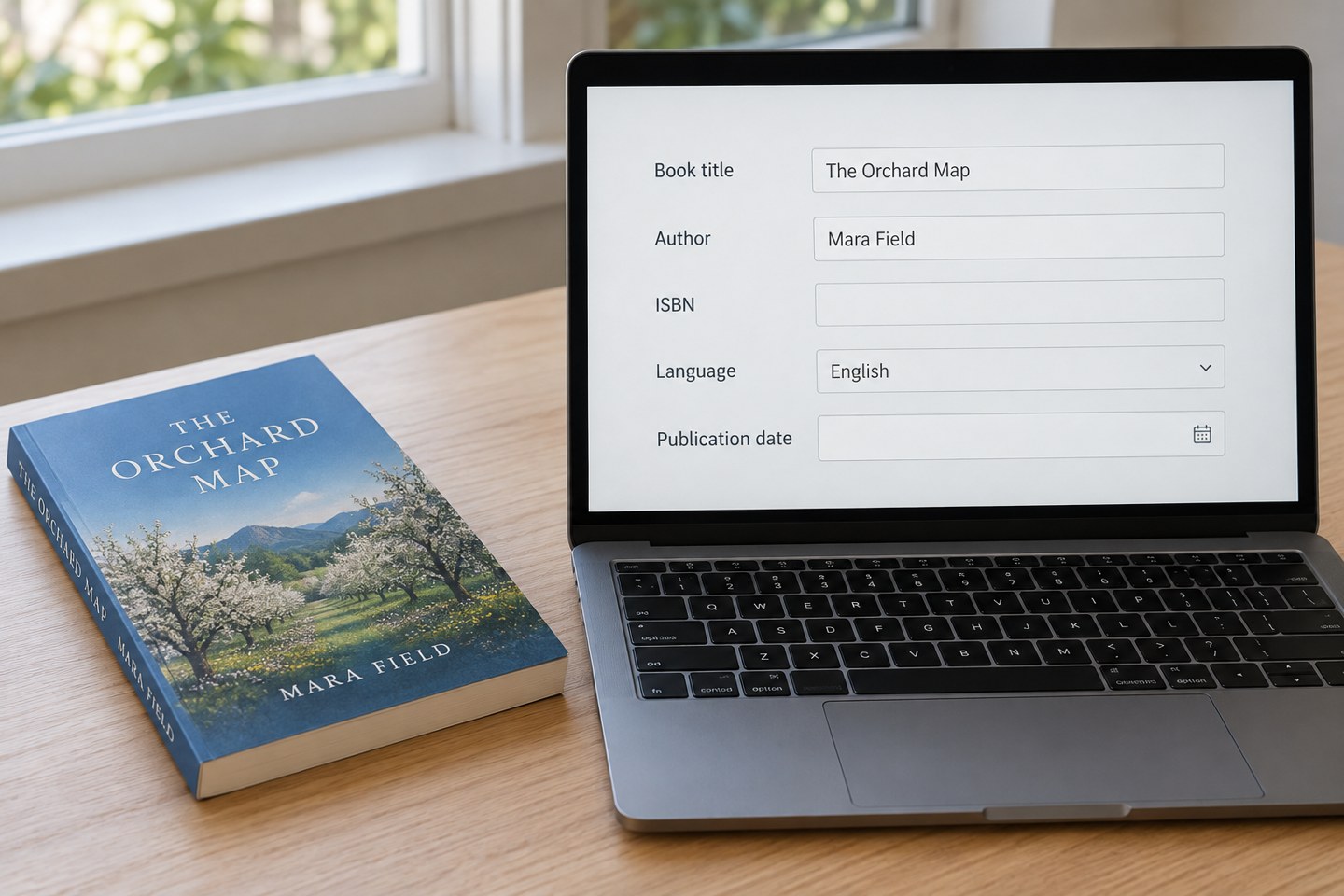
Metadata is the information used to describe and identify a book: title, contributors, language, format, identifiers, description, categories and other publication details. Treat it as part of production, not a set of boxes to improvise while uploading files. An accurate record saves repeated decisions and makes inconsistencies easier to notice.
Start with a master record for the work, then distinguish the products you will publish. A paperback and an ebook share some information but may have different identifiers, prices, files and specifications. Keep those differences explicit. Copying one complete record into another without checking the format-specific fields can create errors that are difficult to trace later.
Use clear field labels and preserve the exact wording intended for publication. A spreadsheet or structured document is sufficient. Include the status of uncertain information so a provisional date or subtitle does not acquire authority merely because it appears in a tidy table. Assign one person to approve changes if several collaborators contribute.
Check title, subtitle and contributor names against the cover and interior. Decide how initials, punctuation, accents and suffixes should appear. Small differences can matter to readers looking for the book and to the people maintaining its records. Use one approved spelling rather than retyping from memory at each stage.
Record contributor roles accurately. An editor, translator and illustrator are not interchangeable labels. If a platform provides a role field, select the appropriate role instead of inserting extra information into a name. Keep supporting publication details where the system expects them rather than using the title field as a general promotional space.
Amazon KDP's metadata guidance requires consistency between important book details and the files supplied, and some details have restrictions on changes after publication. Consult the current field guidance before finalising an upload. That makes early checking worthwhile even when the form itself looks easy to complete.
Maintain an approved full description and any shorter versions needed for particular uses. Label them by purpose or limit. Do not shorten a description by cutting blindly from the end if that removes the audience, premise or main benefit. Each version should remain a coherent account of the book.
Keep formatting separate from wording where possible. A platform may support limited markup, while another needs plain text. Preview the entered description rather than assuming pasted paragraph breaks and emphasis will survive. Check that quotation marks, apostrophes and accented characters display correctly.
Categories and keywords also belong in the record, with the service or classification system identified. The same label may not exist everywhere. Record the reasoning behind less obvious choices so later changes remain connected to the book's subject and intended readership, rather than to an unsupported assumption about what will attract attention.
Use distinct labels for dates with different meanings. The day a file is uploaded is not necessarily the publication date, and a preorder arrangement may introduce another relevant date. Follow the service's definitions. If a date changes, identify every place where the old one was used, including descriptive copy and promotional materials.
Record prices with currency and format. Keep calculations and assumptions in the budget, while the metadata record contains the approved figures that will be entered. If a service converts or recommends prices, inspect the resulting values in the markets you intend to use. An automatically filled field still needs a deliberate decision.
Save the current distribution settings and any relevant identifiers alongside the record. Do not rely on screenshots as the only editable source of information, but use them when they help preserve what a service displayed at a particular time. Account access and recovery details belong in an appropriate secure system, not in a shared publicity document.
Before submission, compare the completed form with the approved record and the actual files. After the listing becomes available, check the public result. Look at the title, author, cover, description and format, and follow the available links between editions. A successful upload message does not establish that every public field displays as intended.
If a correction is needed, record what changed, where it was requested and when it appeared. Keep earlier edition records rather than overwriting them indiscriminately. This gives future updates a reliable starting point and helps you distinguish an old listing from a current error.