Book design
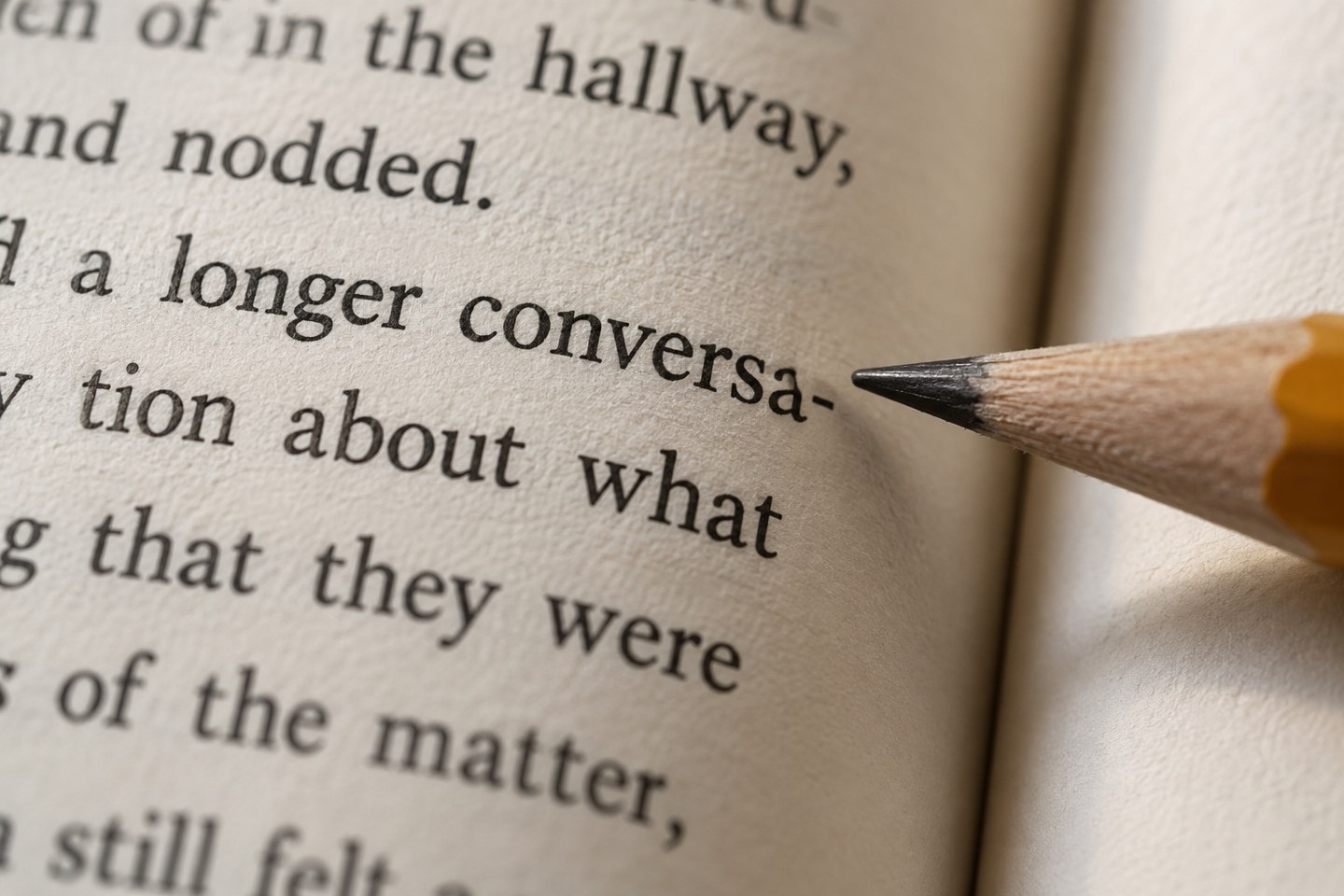
Check hyphenation in a finished layout
Line-end hyphens affect both spacing and reading. Check them in context, especially after the final text changes have moved lines around.
Book design
A cover brief gives a designer something more useful than a preferred colour. Explain the book, its readers and the decisions the cover has to support.
A cover makes a promise before anybody reads the first page. Give the designer enough information to understand that promise: the genre or subject, tone, intended readership and a concise account of the book. Include a longer synopsis or relevant sample where it will help, rather than expecting a few adjectives to carry the whole project.
Describe the emotional register with distinctions. “A mystery with dry humour and little on-page violence” is more informative than “dark but fun”. For nonfiction, explain the reader’s starting point and the kind of book it is. A workbook, an academic study and a narrative account of the same subject need to communicate different experiences.
Name the elements that are genuinely required. Supply the exact title, subtitle and author name, and identify wording that is still provisional. A late subtitle can change the entire hierarchy of a cover. If a series name or existing imprint mark must appear, provide the approved files and explain its role.
Collect a small number of relevant examples and annotate them. You might point to the scale of the title, the restraint of the colour palette or the way an image signals the setting. Separate those observations from a request to copy another book’s design.
Include a few examples that communicate the wrong thing, with reasons. Perhaps a photographic treatment makes the book look like memoir when it is fiction, or a bright illustrated style suggests a younger audience than intended. A clear explanation is more useful than a long mood board in which contradictory references have equal weight.
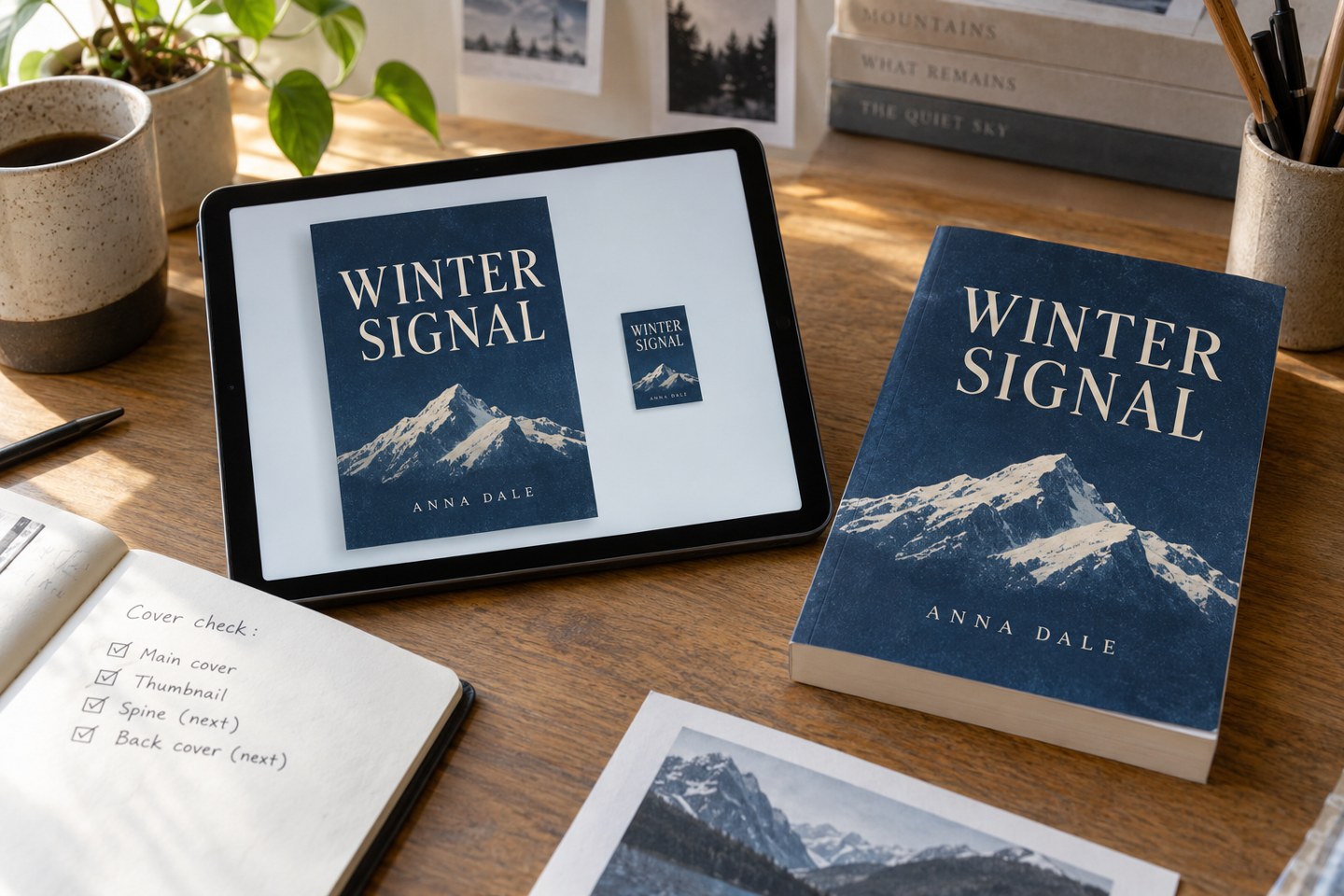
Show the context in which readers will encounter the book. A cover displayed as a small online image has different immediate demands from a large art book on a table, although one design may need to work in both places. Tell the designer which formats and sales contexts are planned rather than assuming the front image is the whole assignment.
For print, identify the intended format, trim size, binding and printing service if known. The final spine width may have to wait until the interior and paper specification are settled. Mark that dependency openly. A provisional cover presentation should not be mistaken for a file ready to send to a printer.
Explain what deliverables you need. These may include a print cover, an ebook front cover and agreed promotional variations. Ask which editable files, fonts and licensed assets can be handed over, and under what terms. Do not assume that possession of a final PDF includes permission to redistribute every ingredient used to create it.
Provide the schedule in stages: initial concepts, feedback, development and final production. Identify who will make the decision and who else needs to comment. Collecting contradictory feedback from several people after each round can turn a defined project into an endless redesign.
A brief should explain the problem clearly without prescribing every visual move. If you already have a fixed composition, say so and establish whether the designer is being asked to execute it or challenge it. Otherwise, avoid narrowing the response to a literal illustration of one scene when the wider book may suggest a stronger approach.
Before sending the brief, check that it answers three questions: what is this book, who is it for, and what must be delivered? Then separate non-negotiable facts from preferences. That distinction gives you a fair basis for reviewing concepts: you can discuss how they meet the brief instead of relying only on an immediate personal reaction.
Book design
Line-end hyphens affect both spacing and reading. Check them in context, especially after the final text changes have moved lines around.
Book design
A cover can look clear at full size and lose its hierarchy in a small listing. Test what remains visible in the places readers will actually see it.