Editing
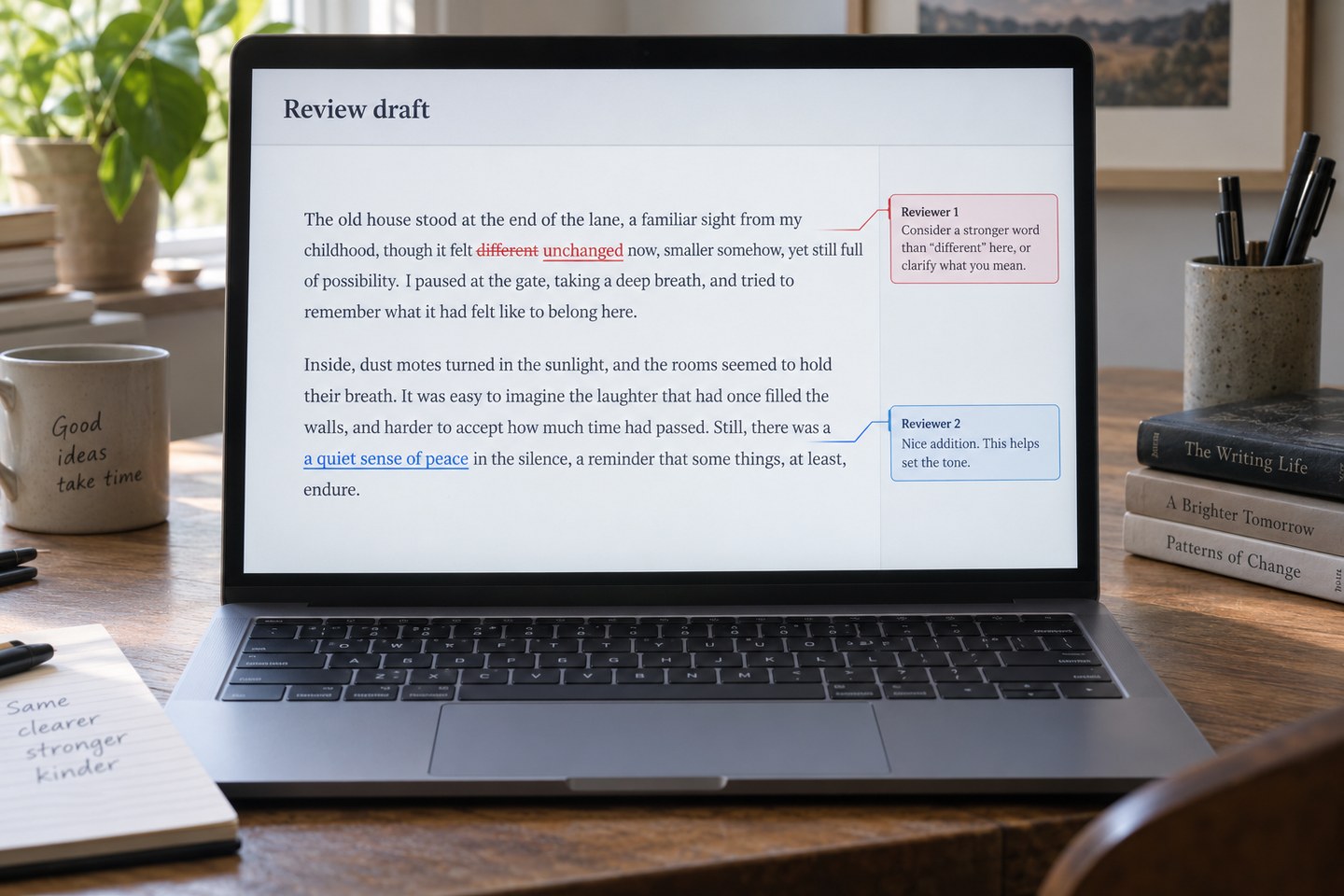
Working through a manuscript in tracked changes
A considered review preserves the reasons behind an edit and leaves a readable, agreed manuscript.
Editing
Conflicting feedback becomes easier to use when you separate a reader’s experience from their proposed repair.

One reader says the opening chapter is too slow. Another calls it the strongest part of the book. That disagreement does not require a vote. The first reader may have been waiting for a plot to begin while the second enjoyed the atmosphere. Both responses can describe what happened during a real reading, even if their recommendations cannot both be followed.
Extract the observation from the prescription. “Cut the family dinner” proposes an action; “I did not understand what the protagonist wanted until after dinner” identifies an experience. The experience is usually the more useful evidence. A sharper intention at the start of the dinner might address the difficulty while preserving the relationships another reader valued.
Ask for a location and a description of the problem rather than a verdict on the whole chapter. Where did attention drift? What question did the reader expect the passage to answer? What did they believe was at stake? Avoid explaining your intention before they answer. An explanation can change their recollection of what the page communicated unaided.
Readers arrive with different knowledge and expectations. A specialist may want less explanation of a familiar method; a newcomer may need an example before its name means anything. Decide which audience the book primarily serves. You can accommodate secondary readers, but a compromise that satisfies neither group is not automatically fairer or clearer.
Previous exposure matters too. Someone who read an earlier draft may supply a motivation you have since removed. A new reader cannot do that. Record whether a response concerns the current text or a remembered version. If an experienced reader praises a scene's clarity, ask what they understand from the scene itself rather than assuming the latest draft contains every necessary clue.
Separate preference from the book's intended promise. A reader who dislikes slow, reflective fiction may still notice a genuine continuity error. Their request to add a chase sequence may be less relevant. Use their precise observations without reshaping the project to suit every taste. This is a judgement about fit, not a reason to dismiss uncomfortable criticism.
Choose a small revision that addresses the shared underlying concern, if there is one. For the dinner scene, you might establish the protagonist's urgent question two paragraphs earlier and remove a repeated description. Save the previous version. Read the revised chapter from the preceding scene, where its pace and emphasis actually begin.
When asking for another response, use a focused question such as “What do you think she risks by staying?” rather than “Is this clearer now?” The first question reveals what the reader inferred; the second invites reassurance. A fresh reader is useful when familiarity would make the test inconclusive.
Some disagreements remain matters of taste. Make a deliberate choice, record the reason if it affects later chapters, and proceed. Feedback has done its work when it helps you understand the consequences of a choice. It does not need to produce unanimous approval.
Editing
A considered review preserves the reasons behind an edit and leaves a readable, agreed manuscript.
Editing
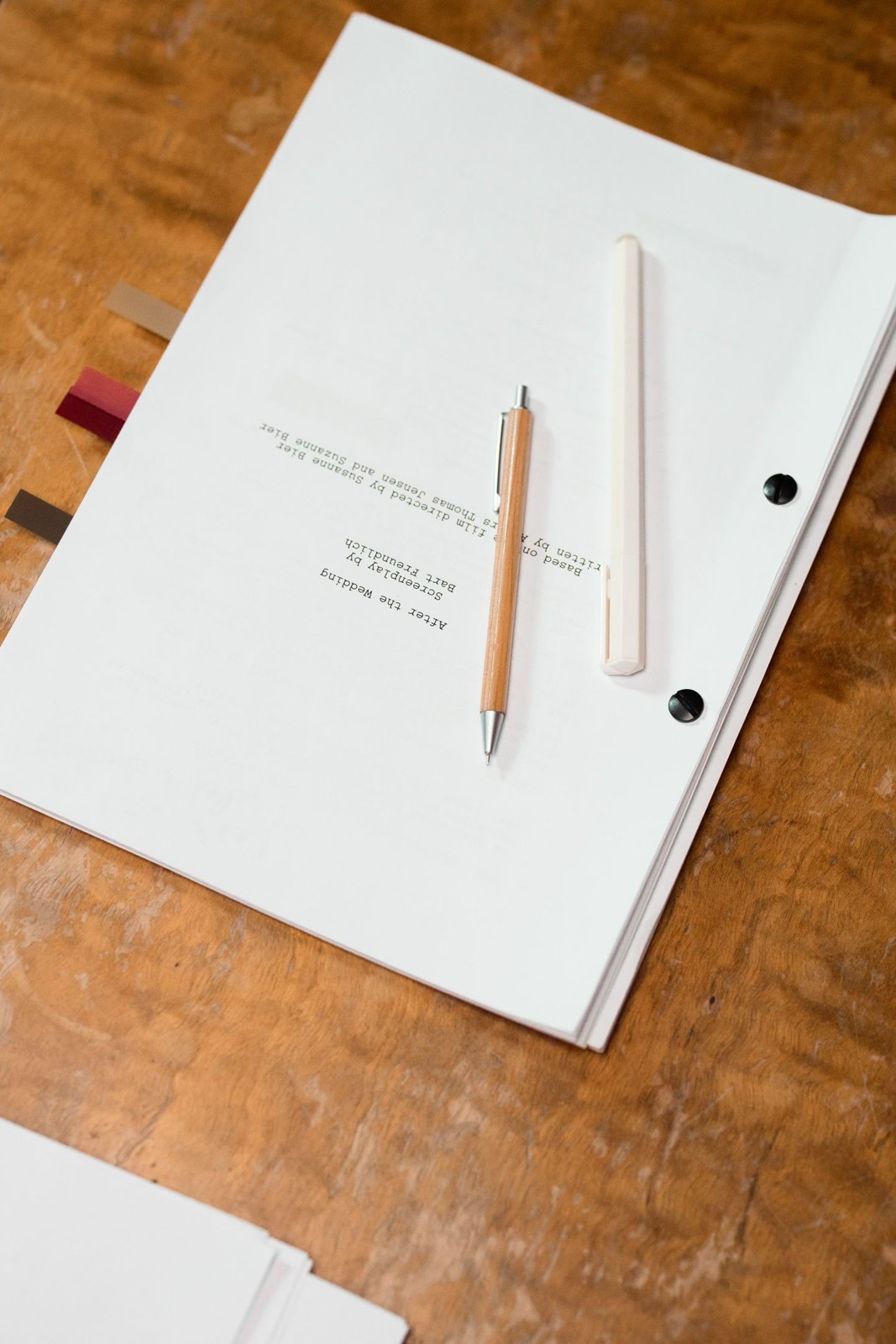
Distance helps you notice what the page actually contains, provided the pause has a clear return point.