Publishing
What print on demand does
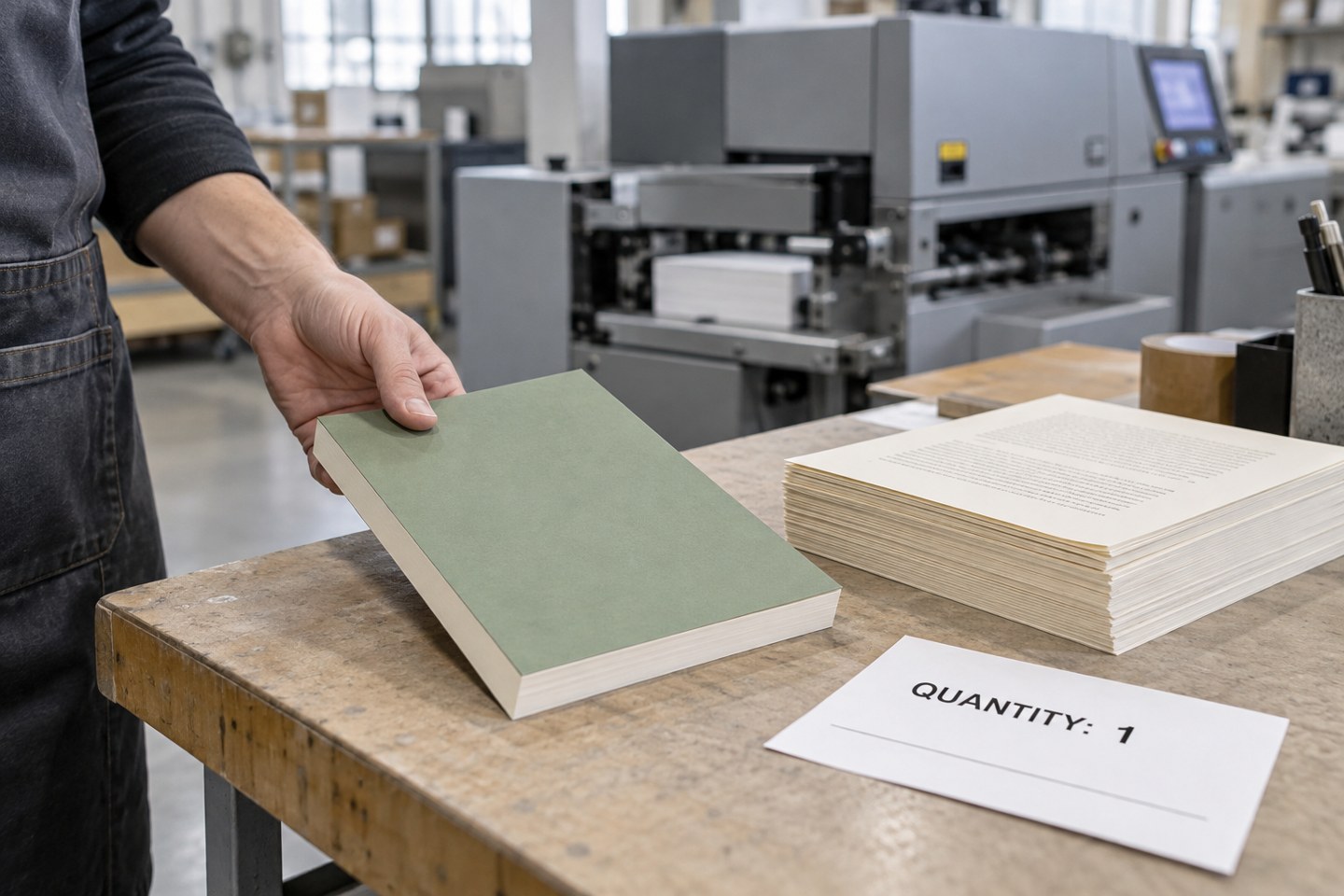
Print on demand changes when copies are manufactured; the book still needs prepared files, a checked proof and a route to readers.
Publishing
A print quotation needs more than a quantity. Make the specification, delivery arrangements and approval process clear before comparing offers.
Quotes are difficult to compare when they describe different objects. Specify trim size, binding, interior colour requirements, paper preferences, cover treatment and the current page count. Mark anything still undecided so the printer can explain the options rather than guessing what you want.
Ask which choices have a significant effect on the job. A slight format change may alter production efficiency; a special finish may require extra time or a different process. Discuss the actual book and its intended use. A frequently handled workbook may need a different physical solution from a short literary paperback.
Supply representative pages if the content has unusual demands. Heavy illustration, full-bleed images or fine diagrams can affect the specification. A printer cannot assess an image-heavy book reliably from the phrase “mostly black and white” if several sections need something different.
Read what each quotation includes. File checking, proofs, packing, transport and any applicable taxes or charges can change the total. Ask how long the quote remains valid and what happens if the page count or quantity changes before approval.
Consider where the books will go and how they will be stored. Ask about carton quantities, delivery access and the space required. A low unit cost does not resolve a delivery that cannot be unloaded at the address you supplied.
Clarify the expected quantity and any production tolerances in the order. If you need an exact number for an event or a set of commitments, discuss that explicitly. Also ask how damaged copies or manufacturing faults should be reported and what evidence the printer needs.
Ask what kind of proof is available and what it can demonstrate. A screen proof may help confirm content and positioning but does not reproduce every physical property of the finished book. Understand which decisions you are approving at each stage.
Get the file requirements directly from the printer and pass them to the person preparing the layout. Confirm the submission deadline, expected proof period and production schedule. Leave room to correct a failed proof rather than treating the first upload as automatically approved.
Before placing the order, summarise the agreed specification and delivery details in one place. Check that the final quotation matches that summary. If something has changed during the conversation, resolve the discrepancy now. The useful comparison is between complete, understood offers for the same job.
Publishing
Print on demand changes when copies are manufactured; the book still needs prepared files, a checked proof and a route to readers.

Publishing
A proof copy is a chance to inspect the book as an object as well as a text. Work through it with the approved files and a clear correction record.