Publishing
Questions to ask before ordering a print run
A print quotation needs more than a quantity. Make the specification, delivery arrangements and approval process clear before comparing offers.
Publishing
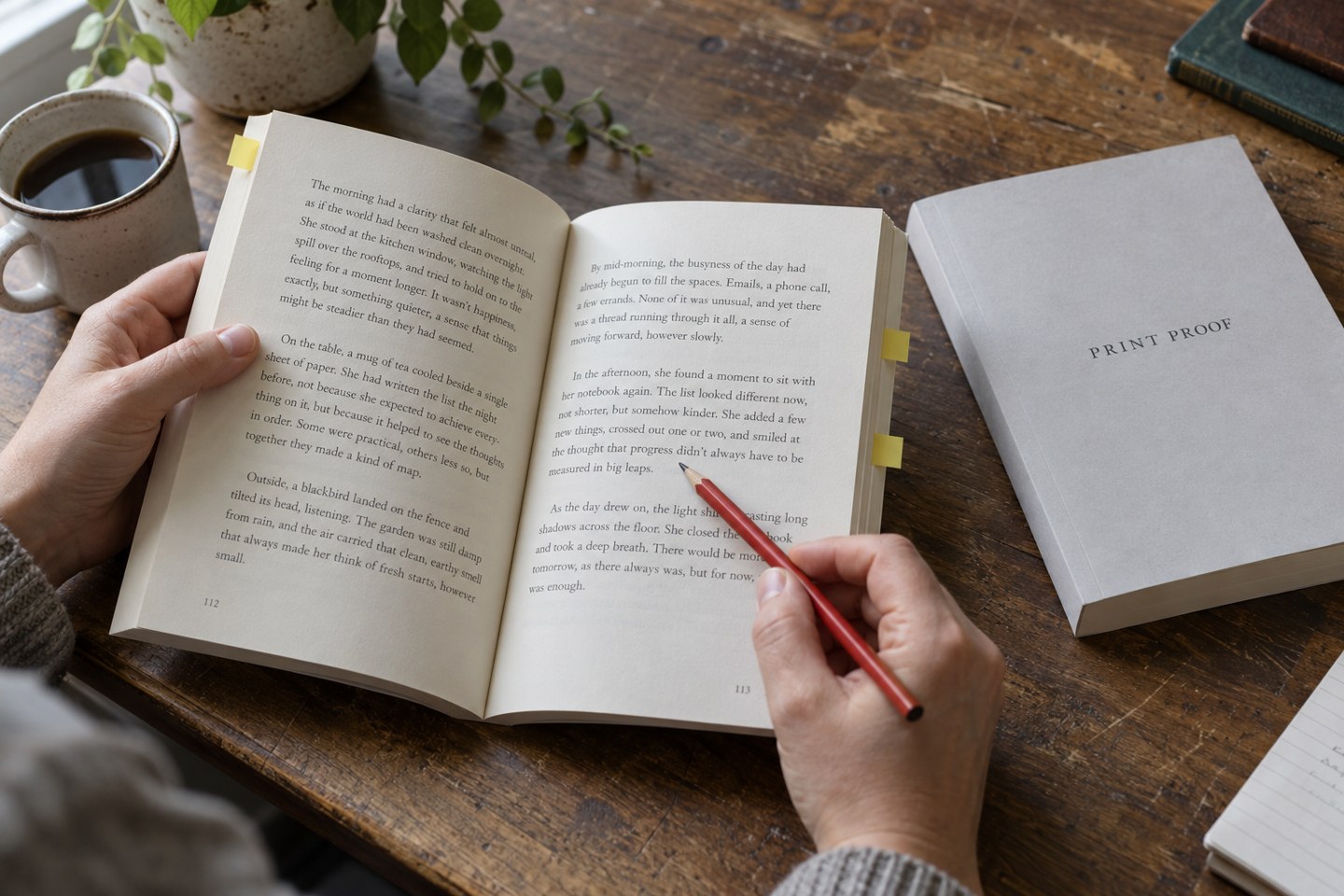
A proof copy is a chance to inspect the book as an object as well as a text. Work through it with the approved files and a clear correction record.
Before checking the proof, identify the interior and cover files used to produce it. Record the date, format and production route. A careful review of a proof made from an outdated file can create confusion when corrections appear to have disappeared or already been made.
Compare basic features with the order: trim size, binding, paper and colour treatment. Count or otherwise verify the expected page sequence. Check the beginning, end and any inserted blank pages. A book can look plausible while containing an omitted section or an unexpected page.
Use the proof under ordinary reading conditions. Open it on a table and hold it in your hands. Notice whether text near the binding is comfortably visible and whether the book handles as expected. A digital preview cannot answer every question about the physical object.
Look at the front, spine and back together. Check alignment, title legibility and the relationship between the spine design and the bound pages. Examine the trim around the edges and whether important elements sit comfortably within the intended safe areas.
Read every word on the cover, including small text. Verify names, edition information, web addresses and any barcode information against the approved record. Familiarity makes it easy to skim a cover that has been seen many times during design.
Distinguish a file problem from a possible manufacturing issue. Text positioned incorrectly in the artwork needs a file correction; a damaged corner may need a different response. Photograph a physical concern and record where it appears so the printer can assess it. Avoid guessing the cause from one symptom alone.
Read the text with attention to errors that survived editing, but give layout its own pass. Look at chapter openings, running heads, page numbers, notes, tables and captions. Check that illustrations remain associated with the passages that discuss them.
Inspect dense or unusual pages rather than only representative plain text. A narrow table, a dark photograph or a page with many notes may reveal problems that ordinary pages hide. View images at their actual printed size and under consistent light before comparing them with the screen.
Check navigation and references. A contents entry may point to a page that moved during the final revision. A caption may still refer to an earlier figure number. Searchable source files can help trace these problems, but record the correction against the proof location where it was found.
For each issue, record a page or cover location, the existing wording or feature, and the required change. Separate confirmed corrections from questions. “Page 42, second paragraph: replace…” is ready to act on; “something wrong near the start” is not.
Avoid turning the proof into a fresh structural rewrite unless a serious problem requires it. Larger changes can alter pagination, references and spine dimensions. If they are necessary, treat them as a new production pass with the corresponding checks, rather than squeezing them into a list of minor corrections.
After corrections, verify that they were applied and that nothing nearby broke. Depending on the nature of the changes and the production process, another physical proof may be appropriate. At minimum, inspect the revised production files and understand what remains untested physically.
Keep the checked proof and its correction record until the final production stage is resolved. Approval should refer to an identified version. That makes it possible to compare the manufactured book with what was actually reviewed, instead of relying on a memory of how the proof looked.
Publishing
A print quotation needs more than a quantity. Make the specification, delivery arrangements and approval process clear before comparing offers.

Publishing
Prepare the book file, cover and listing information as one release. Preview the converted result before treating an accepted upload as a finished ebook.