Writing
Where to end a chapter
A chapter ending controls a pause. Choose the pause for the question or consequence you want readers to carry forward.
Writing
A time jump can leave events behind while giving readers enough bearings to understand the new present.
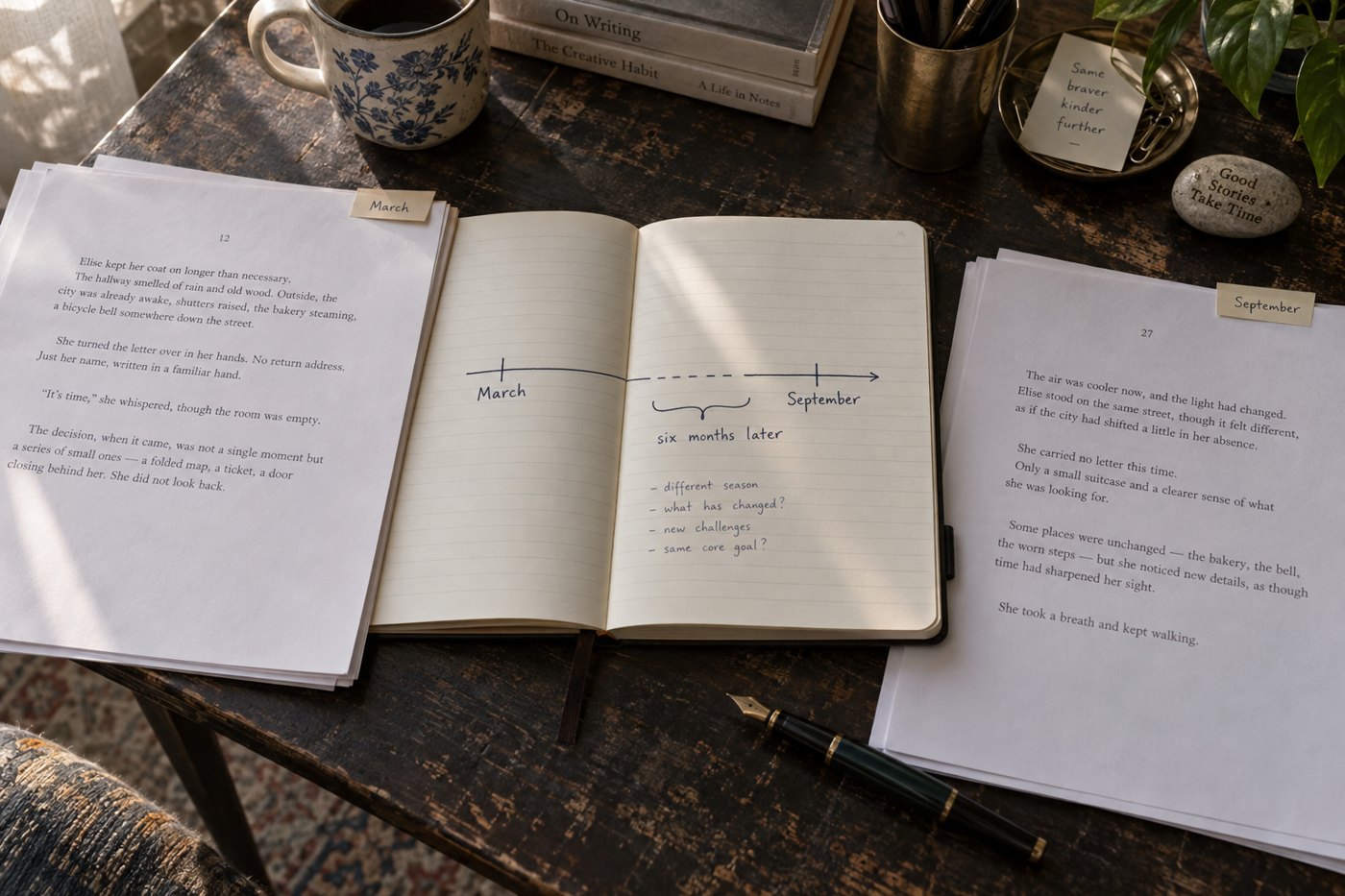
When a chapter moves forward six months, readers need to discover the change quickly enough to interpret what they are seeing. You can state the interval directly, use a dated heading or establish a changed circumstance. The right choice depends on the book's voice and how much the exact interval matters. Clarity does not spoil a time jump; it lets the reader attend to its consequences.
Consider an invented transition from an unsuccessful job interview to the character already working in the building. A new staff pass, a familiar route through reception and a reference to a probation review can establish the later situation. If the manuscript withholds all such cues, readers may spend the page wondering whether they misunderstood the earlier scene.
Keep an internal chronology even if the finished book uses few dates. Record the duration of journeys, seasons, school terms or other intervals that affect events. You may not need to tell readers that thirty-seven days passed, but you need to know whether a promised two-week wait has quietly become two months.
A repeated object, relationship or unfinished intention can connect the two periods. The character still carries the envelope they refused to open; a familiar chair is now occupied by someone else; the person who once needed instructions now gives them. Such continuities help readers perceive the change instead of receiving a list of everything that happened offstage.
Choose the first scene after the jump for the new situation it reveals. A conversation about a late payment might show that the character's apparent success has created an obligation. The scene can supply immediate purpose while the details gradually establish what the interval has altered. You do not need to pause the narrative for a complete account of the missing months.
Ask which omitted events the reader actually needs to know. A promotion may require explanation because it changes the relationship between two characters. Every uneventful workday does not. Supply background when it bears on the current action, and let some ordinary continuity remain implicit.
A time jump can skip repetitive logistics but accidentally skip the change readers most wanted to witness. If a bitter disagreement becomes a warm friendship during the gap, the later scene may feel unearned. Consider showing the decisive encounter before the jump, or allowing the new relationship to remain uncertain enough that its development becomes part of the story.
The missing period can also be a deliberate mystery. In that case, distinguish uncertainty about what happened from confusion about when the present scene occurs. Readers can understand that a year has passed while wondering why the character no longer uses their old name.
Read the last paragraph before the jump and the first page after it without the intervening chapter title. Then read them with the title restored. Notice which information each element supplies. Keep the signals that establish time and consequence; remove repetitive explanations that tell the reader the same thing twice.